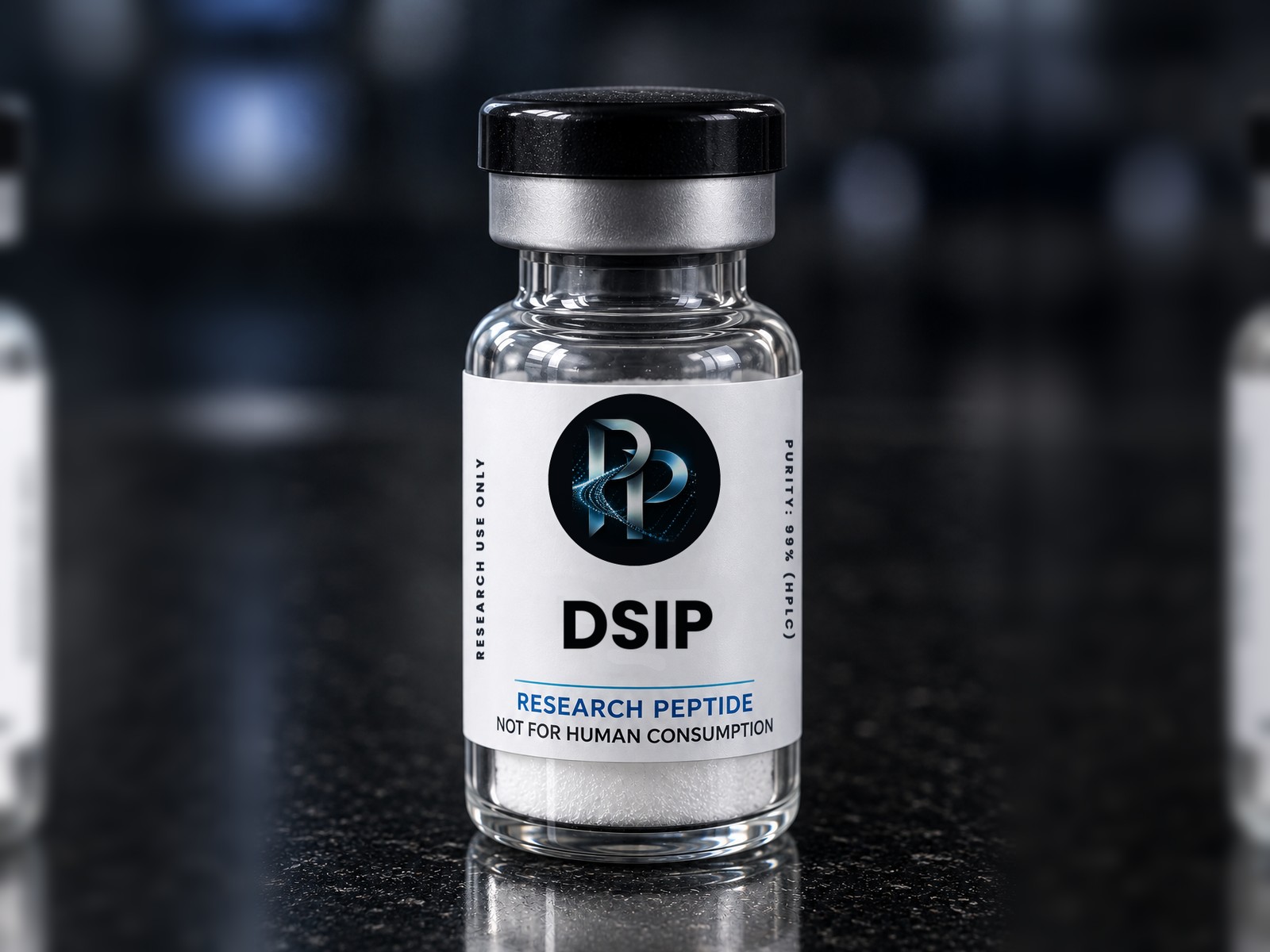
Neuroscience Research99% purityDSIP
Naturally occurring nonapeptide (synthetic form)
A nonapeptide first isolated from rabbit cerebral venous blood in the 1970s on the basis of sleep-inducing activity. Its physiological role remains unresolved.
Research category
Peptides investigated in models of cognition, stress response, sleep regulation and neuroprotection.
Every compound below is supplied at 99% purity (HPLC) for in-vitro laboratory research. Open a profile for technical data, research background and references, or enquire to order directly.
Neuroscience Research99% purityNaturally occurring nonapeptide (synthetic form)
A nonapeptide first isolated from rabbit cerebral venous blood in the 1970s on the basis of sleep-inducing activity. Its physiological role remains unresolved.
Neuroscience Research99% purityC-terminal decapeptide of kisspeptin (KISS1 gene product)
The minimal active fragment of kisspeptin, the KISS1R (GPR54) ligand that is a master regulator of GnRH release. Widely used in reproductive-neuroendocrinology research.
Neuroscience Research99% purityCyclic nonapeptide hormone (synthetic form)
A hypothalamic nonapeptide hormone and a licensed medicine in obstetrics. Research interest extends to social behaviour, stress physiology and receptor pharmacology.
Neuroscience Research99% puritySynthetic tripeptide
A tripeptide from the same Russian 'bioregulator' research programme as epithalon, studied in neuronal cell culture and rodent models of brain ageing and hypoxia.
Neuroscience Research99% puritySynthetic heptapeptide (tuftsin analogue)
A synthetic analogue of the immunomodulatory tetrapeptide tuftsin, extended with a Pro-Gly-Pro tail for stability. Developed in Russia and studied in anxiety and cognition models.
Neuroscience Research99% puritySynthetic heptapeptide (ACTH fragment analogue)
A synthetic analogue of the ACTH(4-10) fragment, developed in Russia and studied in models of cognition, stroke and neuroprotection.
For laboratory research only. All compounds described on this website are supplied strictly for in-vitro laboratory research. They are not for human or veterinary use, and no medical or therapeutic claims are made. Researchers remain responsible for complying with the rules that apply to them.
Full disclaimer