
MOTS-c
Mitochondrial-derived 16-amino-acid peptide
Also known as Mitochondrial open reading frame of the 12S rRNA type-c
A peptide encoded within the mitochondrial 12S rRNA gene, described in 2015 as a regulator of metabolic homeostasis in mice.
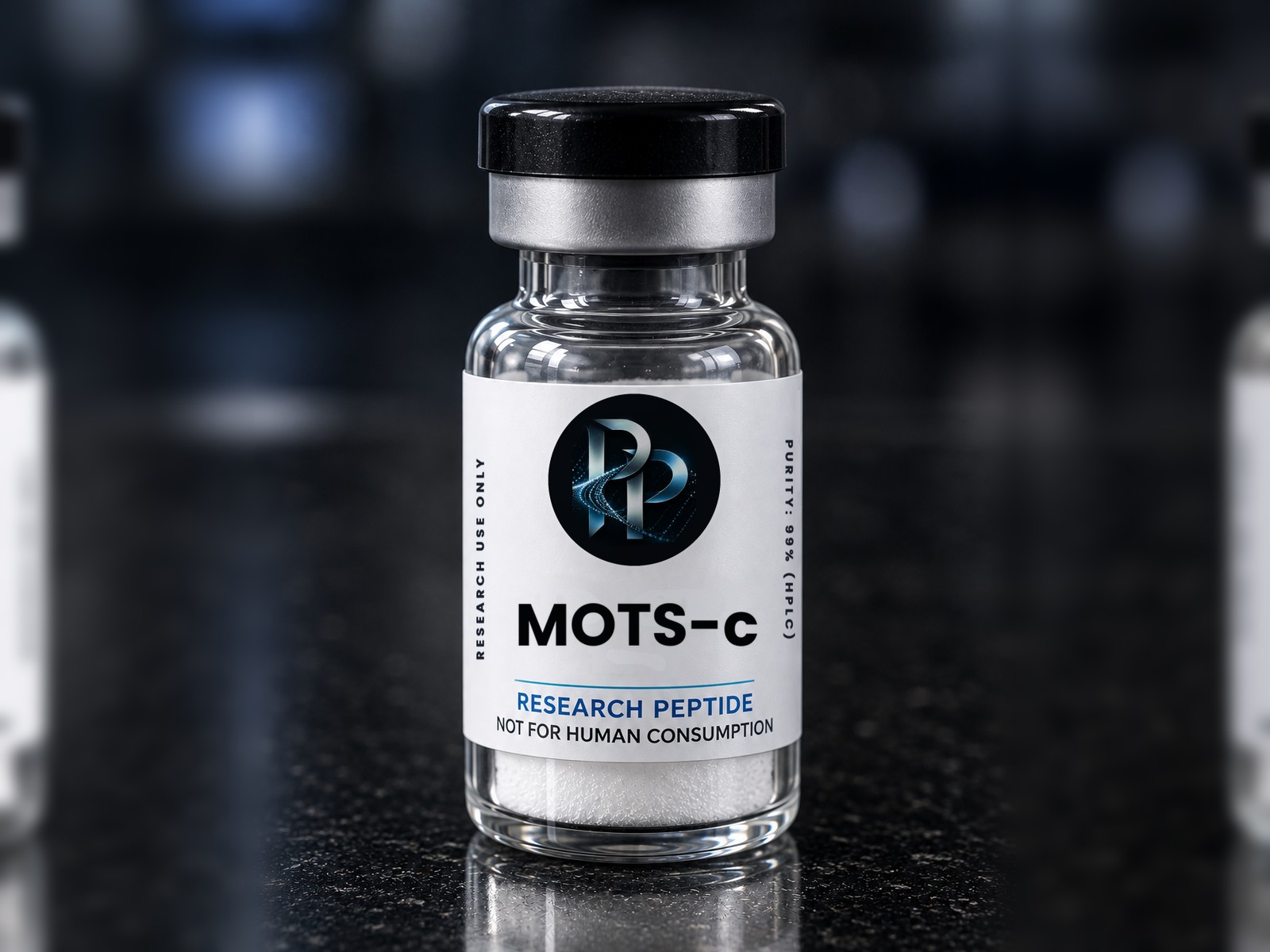
Technical information
Values are shown with their status. “Verified” means the value has been checked against a primary database such as PubChem.
- Classification
- Mitochondrial-derived 16-amino-acid peptide
- CAS number
- 1627580-64-6 Pending
- Molecular formula
- C101H152N28O22S2 Pending
- Molecular weight
- 2174.6 g/mol Pending
- Sequence / structure
- MRWQEMGYIFYPRKLR Pending
Some values are still being checked and should be treated as provisional until marked verified.
How this compound is tested
LC-MS identity for the 16-residue sequence and HPLC purity; oxidised methionine species should be reported where present.
Research background
MOTS-c is one of a small group of mitochondrial-derived peptides (with humanin and the SHLPs) encoded by short open reading frames in mitochondrial DNA. Lee et al. (2015) reported that it regulates insulin sensitivity and metabolic homeostasis in mice via the folate–methionine cycle and AMPK activation, and can translocate to the nucleus under metabolic stress.
Mechanisms investigated in published research
These are the mechanisms examined in the cited literature. Describing them is not a claim that the compound produces any effect in humans.
- AMPK activation via inhibition of the folate cycle and de-novo purine biosynthesis (reported in mouse and cell studies).
- Nuclear translocation and regulation of stress-response gene expression under metabolic stress.
Summary of evidence
Laboratory and animal findings are kept separate from human clinical evidence.
Preclinical findings
1 cited- Mice treated with MOTS-c showed resistance to diet-induced obesity and insulin resistance (Lee et al., 2015).
- Subsequent rodent studies examined exercise capacity and age-related decline.
Human clinical evidence
An early-phase trial of a MOTS-c analogue (CB4211) has been reported by its developer; no peer-reviewed phase 2/3 efficacy data exist. Circulating MOTS-c has been measured in human observational studies. No approved medicine.
Limitations and open questions
- Mechanistic data are predominantly from a small number of laboratories.
- Human data are observational or early-phase.
- Analytical challenges: the peptide contains methionine residues prone to oxidation.
Scientific references
Publications cited on this page. Links open the publisher or PubMed record.
[1]Lee C, Zeng J, Drew BG, et al.. The mitochondrial-derived peptide MOTS-c promotes metabolic homeostasis and reduces obesity and insulin resistance. Cell Metabolism (2015).
Preclinical Citation pending
Research use only
MOTS-c is described here for laboratory research. It is not approved for human or veterinary use unless a regulator has said otherwise, and nothing on this page is medical advice or guidance on administration. A disclaimer does not by itself make any activity lawful. Full disclaimer.
Contact options
Talk to the Positive Peptides team about MOTS-c
Order enquiries, documentation requests and technical questions about this compound — we answer directly, usually within two working days.
Related compounds
 Cellular & Ageing Research99% purity
Epithalon
Synthetic tetrapeptide
A synthetic tetrapeptide developed in Russia, studied in cell culture for effects on telomerase expression and in animal models of ageing. The evidence base is largely from a single research institute.
 Cellular & Ageing Research99% purity
NAD⁺
Pyridine nucleotide coenzyme
A ubiquitous coenzyme central to redox metabolism and a substrate for sirtuins, PARPs and CD38. A major focus of ageing and metabolism research because cellular NAD⁺ levels decline with age in many tissues.