
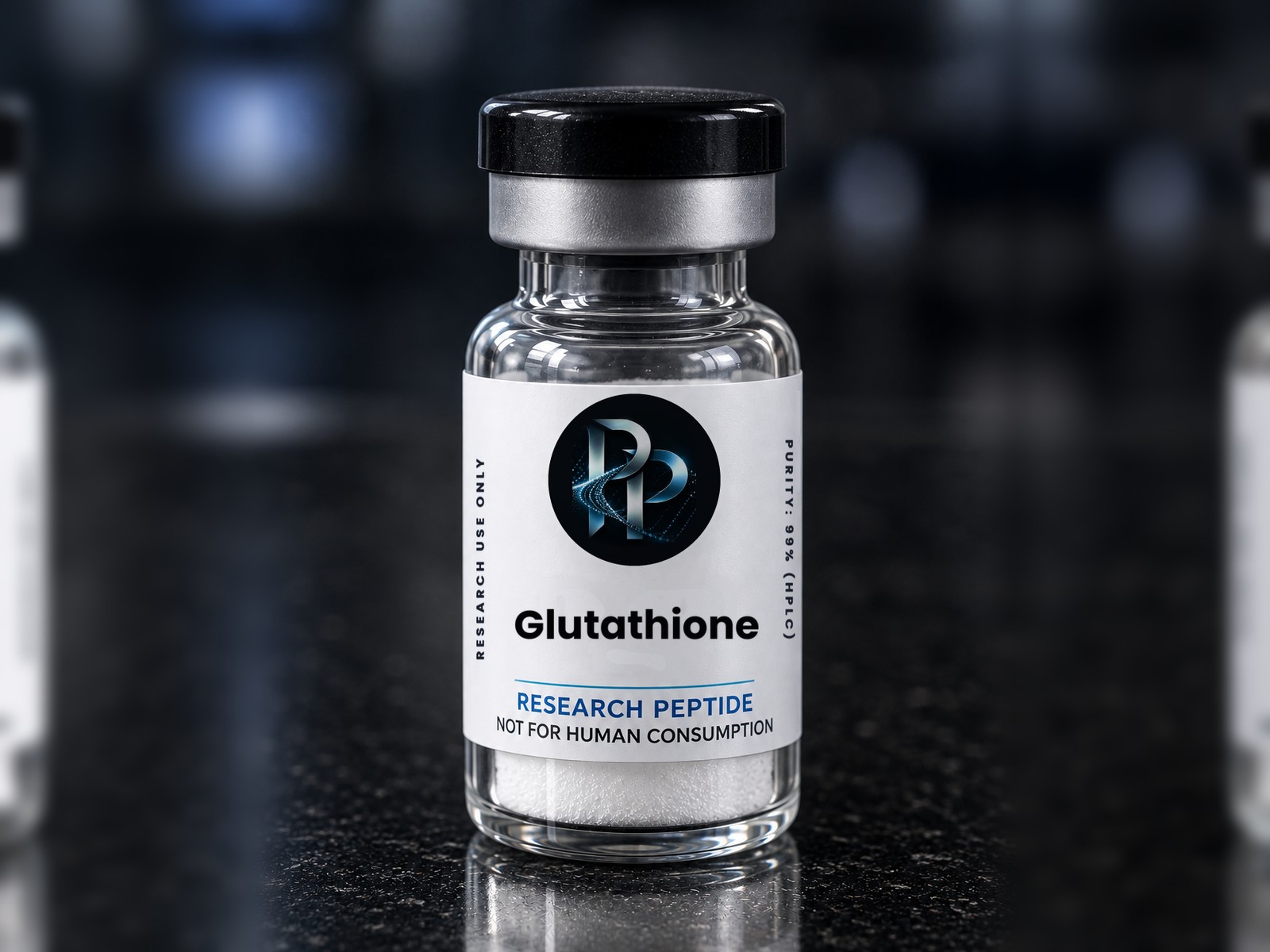
Glutathione (reduced)
Endogenous tripeptide antioxidant
Also known as GSH, L-γ-glutamyl-L-cysteinylglycine
The most abundant intracellular non-protein thiol, central to redox buffering, detoxification and protein thiol regulation. A standard reagent in oxidative-stress research.
Technical information
Values are shown with their status. “Verified” means the value has been checked against a primary database such as PubChem.
- Classification
- Endogenous tripeptide antioxidant
- CAS number
- 70-18-8 Pending
- Molecular formula
- C10H17N3O6S Pending
- Molecular weight
- 307.3 g/mol Pending
- Sequence / structure
- γ-Glu-Cys-Gly Pending
Some values are still being checked and should be treated as provisional until marked verified.
How this compound is tested
HPLC-UV purity and LC-MS identity; the proportion of oxidised dimer (GSSG) is a key quality attribute and should appear on the COA.
Research background
Glutathione is synthesised in all mammalian cells from glutamate, cysteine and glycine. Its reduced (GSH) and oxidised (GSSG) forms constitute the principal cellular redox buffer. It is used in research as a reagent, as a reference compound in antioxidant assays, and as a subject of study in ageing and disease models (Forman et al., 2009).
Mechanisms investigated in published research
These are the mechanisms examined in the cited literature. Describing them is not a claim that the compound produces any effect in humans.
- Redox buffering via the GSH/GSSG couple and glutathione peroxidase/reductase cycling.
- Conjugation of electrophiles via glutathione S-transferases.
- Protein S-glutathionylation as a signalling modification.
Summary of evidence
Laboratory and animal findings are kept separate from human clinical evidence.
Preclinical findings
Large literature across cell and animal models of oxidative stress, hepatotoxicity and ageing.
Human clinical evidence
N-acetylcysteine (a precursor) is a licensed medicine for specific indications; glutathione itself has limited oral bioavailability and human trials of supplementation report inconsistent effects on systemic markers. Licensed uses of related products do not apply to research-grade glutathione.
Limitations and open questions
- Readily oxidised in solution; GSH:GSSG ratio should be documented for research use.
- Oral bioavailability in humans is low and variable.
Scientific references
Publications cited on this page. Links open the publisher or PubMed record.
[1]Forman HJ, Zhang H, Rinna A. Glutathione: overview of its protective roles, measurement, and biosynthesis. Molecular Aspects of Medicine (2009).
Review Citation pending
Research use only
Glutathione (reduced) is described here for laboratory research. It is not approved for human or veterinary use unless a regulator has said otherwise, and nothing on this page is medical advice or guidance on administration. A disclaimer does not by itself make any activity lawful. Full disclaimer.
Contact options
Talk to the Positive Peptides team about Glutathione (reduced)
Order enquiries, documentation requests and technical questions about this compound — we answer directly, usually within two working days.
Related compounds
 Cellular & Ageing Research99% purity
MOTS-c
Mitochondrial-derived 16-amino-acid peptide
A peptide encoded within the mitochondrial 12S rRNA gene, described in 2015 as a regulator of metabolic homeostasis in mice.
 Cellular & Ageing Research99% purity
NAD⁺
Pyridine nucleotide coenzyme
A ubiquitous coenzyme central to redox metabolism and a substrate for sirtuins, PARPs and CD38. A major focus of ageing and metabolism research because cellular NAD⁺ levels decline with age in many tissues.