
KPV
C-terminal tripeptide fragment of α-melanocyte-stimulating hormone
Also known as Lys-Pro-Val, α-MSH(11-13)
The C-terminal tripeptide of α-MSH, studied for anti-inflammatory activity in intestinal epithelial and immune cell models.
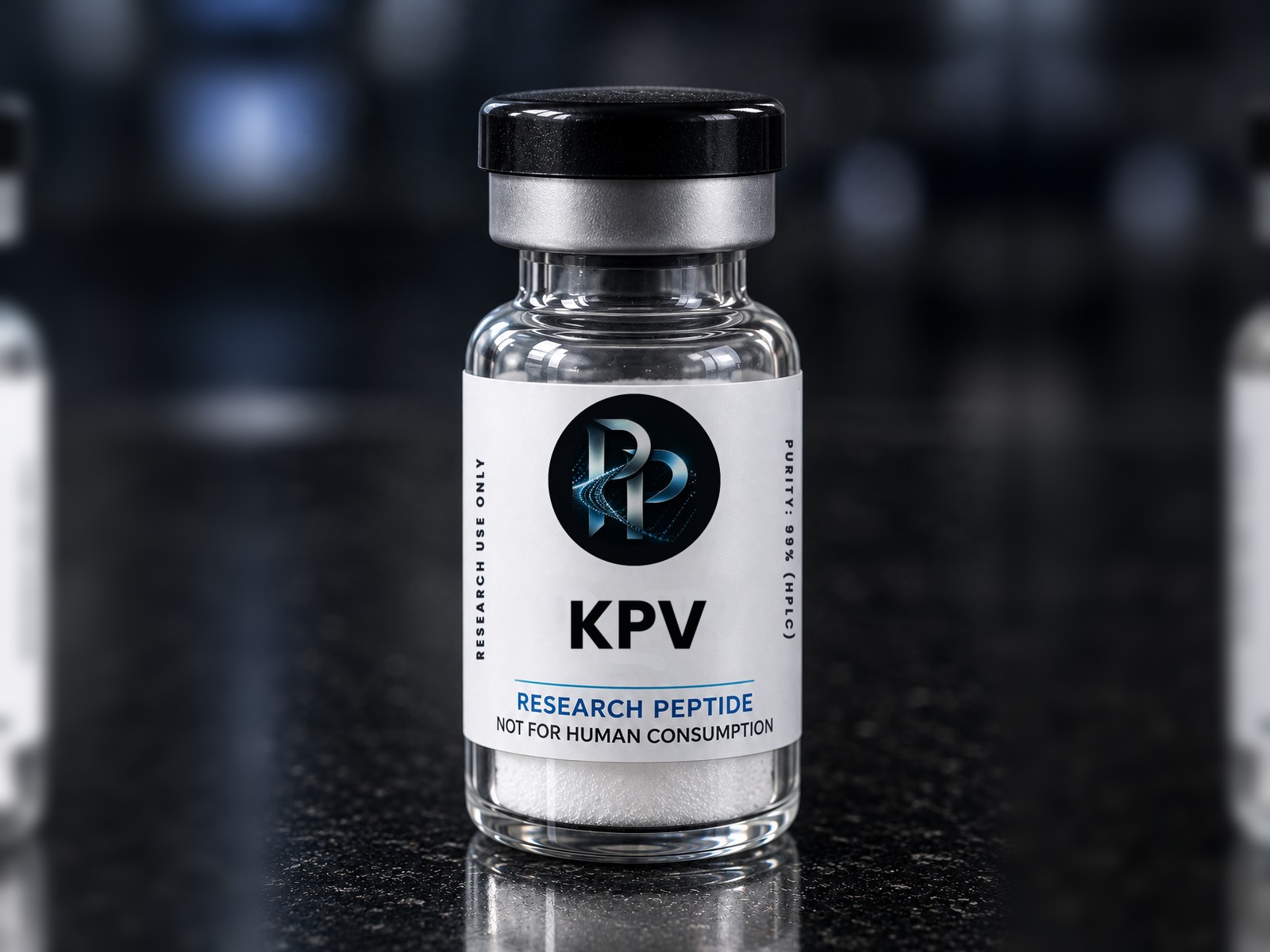
Technical information
Values are shown with their status. “Verified” means the value has been checked against a primary database such as PubChem.
- Classification
- C-terminal tripeptide fragment of α-melanocyte-stimulating hormone
- CAS number
- 67727-97-3 Pending
- Molecular formula
- C16H30N4O4 Pending
- Molecular weight
- 342.4 g/mol Pending
- Sequence / structure
- Lys-Pro-Val (KPV) Pending
Some values are still being checked and should be treated as provisional until marked verified.
How this compound is tested
A tripeptide of this size is readily characterised by LC-MS and HPLC; researchers should confirm whether the material is the free peptide or a salt.
Research background
KPV corresponds to residues 11–13 of α-melanocyte-stimulating hormone (α-MSH). Researchers became interested in the fragment because it retains some of the anti-inflammatory properties attributed to α-MSH while lacking the pigmentary activity associated with the full peptide. It has been studied in models of colitis and epithelial inflammation.
Mechanisms investigated in published research
These are the mechanisms examined in the cited literature. Describing them is not a claim that the compound produces any effect in humans.
- Uptake via the PepT1 transporter in intestinal epithelial cells, reported by Dalmasso et al. (2008).
- Inhibition of NF-κB signalling and reduction of pro-inflammatory cytokine production in cell models.
- Proposed melanocortin-receptor-independent anti-inflammatory activity.
Summary of evidence
Laboratory and animal findings are kept separate from human clinical evidence.
Preclinical findings
1 cited- Mouse models of chemically induced colitis reported reduced inflammatory scores with KPV (Dalmasso et al., 2008).
- Cell culture studies in intestinal epithelial and immune cells reported reduced inflammatory signalling.
Human clinical evidence
No controlled human clinical trials of KPV were identified in our reference set.
Limitations and open questions
- A small number of research groups account for most publications.
- Dose–response and pharmacokinetic characterisation in animals is limited.
- No human data.
Scientific references
Publications cited on this page. Links open the publisher or PubMed record.
[1]Dalmasso G, Charrier-Hisamuddin L, Nguyen HT, Yan Y, Sitaraman S, Merlin D. PepT1-mediated tripeptide KPV uptake reduces intestinal inflammation. Gastroenterology (2008).
Preclinical Citation pending
Research use only
KPV is described here for laboratory research. It is not approved for human or veterinary use unless a regulator has said otherwise, and nothing on this page is medical advice or guidance on administration. A disclaimer does not by itself make any activity lawful. Full disclaimer.
Contact options
Talk to the Positive Peptides team about KPV
Order enquiries, documentation requests and technical questions about this compound — we answer directly, usually within two working days.
Related compounds
 Tissue Repair Research99% purity
BPC-157
Synthetic pentadecapeptide (gastric-juice-derived sequence)
A 15-amino-acid synthetic peptide derived from a protective protein sequence found in human gastric juice. It is one of the most frequently studied peptides in preclinical tissue-repair research, with the overwhelming majority of data coming from rodent models.
 Melanocortin Research99% purity
Melanotan II
Cyclic heptapeptide melanocortin receptor agonist (non-selective)
A cyclic analogue of α-MSH developed at the University of Arizona as a potent, non-selective melanocortin receptor agonist. Studied in pigmentation and sexual-function physiology; never approved as a medicine.