
AOD-9604
Synthetic 16-amino-acid fragment of human growth hormone (C-terminal, disulfide-bridged)
Also known as Tyr-hGH(177-191), Anti-Obesity Drug 9604
A modified C-terminal fragment of human growth hormone, investigated in the 1990s–2000s for lipolytic activity without the growth-promoting effects of the full hormone. Clinical development was discontinued.
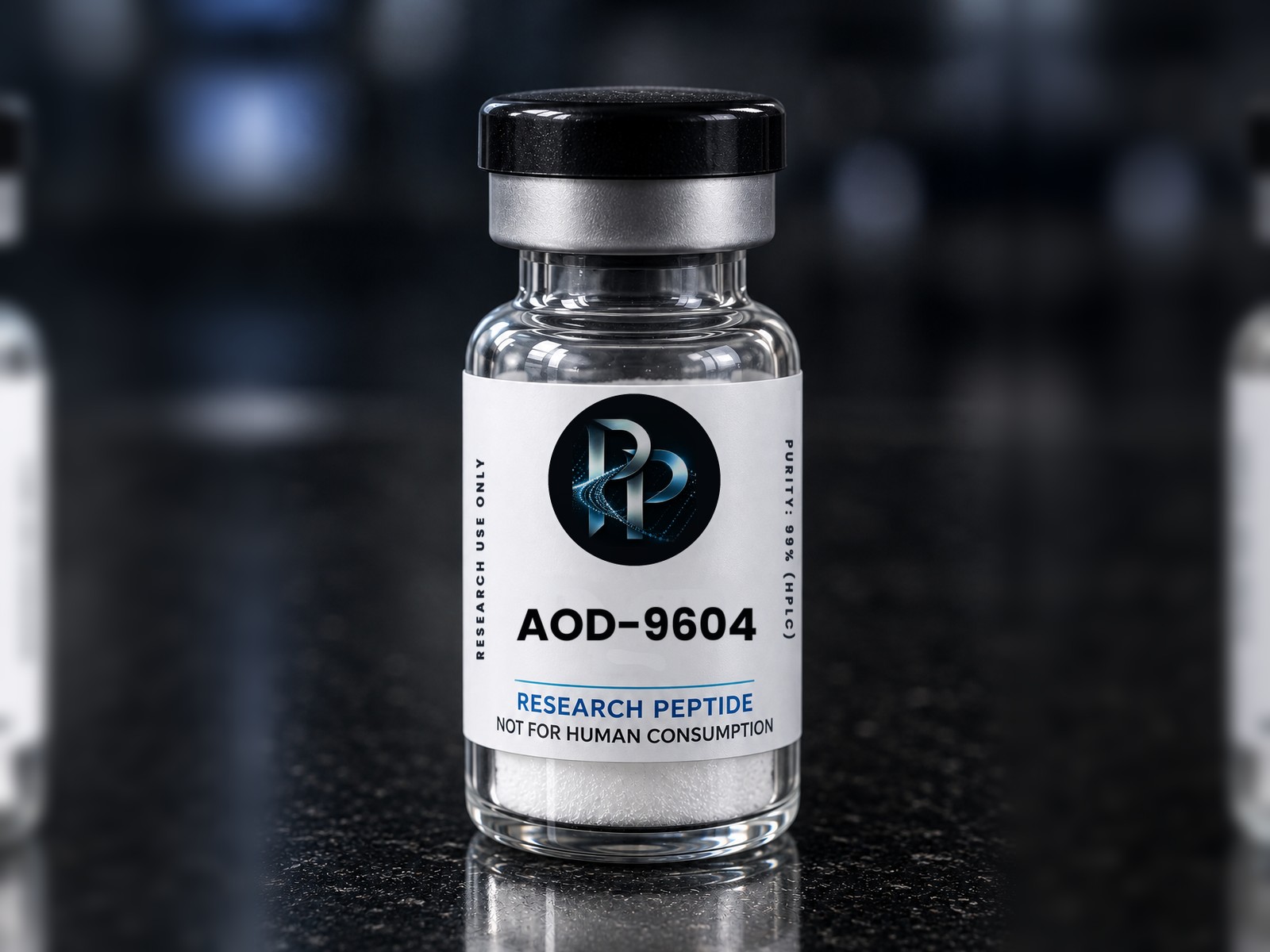
Technical information
Values are shown with their status. “Verified” means the value has been checked against a primary database such as PubChem.
- Classification
- Synthetic 16-amino-acid fragment of human growth hormone (C-terminal, disulfide-bridged)
- CAS number
- 221231-10-3 Pending
- Molecular formula
- C78H123N23O23S2 Pending
- Molecular weight
- 1815.1 g/mol Pending
- Sequence / structure
- Tyr-Leu-Arg-Ile-Val-Gln-Cys-Arg-Ser-Val-Glu-Gly-Ser-Cys-Gly-Phe (disulfide Cys7–Cys14) Pending
Some values are still being checked and should be treated as provisional until marked verified.
How this compound is tested
LC-MS identity consistent with the oxidised (bridged) form; HPLC purity.
Research background
AOD-9604 is the hGH(177-191) fragment with an N-terminal tyrosine, developed by Metabolic Pharmaceuticals (Australia) on the hypothesis that the C-terminal region of GH mediates lipolytic effects (Ng et al., 2000). Phase 2 obesity trials did not show sufficient efficacy and development stopped. It later received GRAS status in the US as a food ingredient in a specific context, which is unrelated to any medicinal claim.
Mechanisms investigated in published research
These are the mechanisms examined in the cited literature. Describing them is not a claim that the compound produces any effect in humans.
- Proposed stimulation of lipolysis and inhibition of lipogenesis in adipose tissue via β3-adrenergic receptor-related pathways in rodent models.
- Reported lack of effect on IGF-1 or glucose, distinguishing it from full-length GH.
Summary of evidence
Laboratory and animal findings are kept separate from human clinical evidence.
Preclinical findings
1 citedObese mouse models reported weight and fat-mass effects (Ng et al., 2000); mechanism studies in adipocytes.
Human clinical evidence
Phase 2 trials in obese adults reported no clinically meaningful efficacy and development was discontinued. No approved medicine.
Limitations and open questions
- Failed phase 2 development.
- Disulfide-bridged fragment with potential for incorrect folding; analytics should confirm the bridge.
Scientific references
Publications cited on this page. Links open the publisher or PubMed record.
[1]Ng FM, Sun J, Sharma L, Libinaki R, Jiang WJ, Gianello R. Metabolic studies of a synthetic lipolytic domain of growth hormone. Hormone Research (2000).
Preclinical Citation pending
Research use only
AOD-9604 is described here for laboratory research. It is not approved for human or veterinary use unless a regulator has said otherwise, and nothing on this page is medical advice or guidance on administration. A disclaimer does not by itself make any activity lawful. Full disclaimer.
Contact options
Talk to the Positive Peptides team about AOD-9604
Order enquiries, documentation requests and technical questions about this compound — we answer directly, usually within two working days.
Related compounds
 Metabolic Research99% purity
Semaglutide
Acylated GLP-1 receptor agonist (31-amino-acid analogue)
A long-acting glucagon-like peptide-1 (GLP-1) receptor agonist. In its licensed pharmaceutical forms it is an approved medicine; as a research compound it is used to study incretin signalling, appetite regulation and glucose homeostasis.
 Growth Hormone Axis Research99% purity
Tesamorelin
Synthetic GHRH(1-44) analogue (trans-3-hexenoyl modified)
A stabilised analogue of growth-hormone-releasing hormone (GHRH). Licensed in some jurisdictions for a specific indication; used in research to study the hypothalamic–pituitary GH axis.